
Dental Crowns
Indication for Full Coverage Crowns
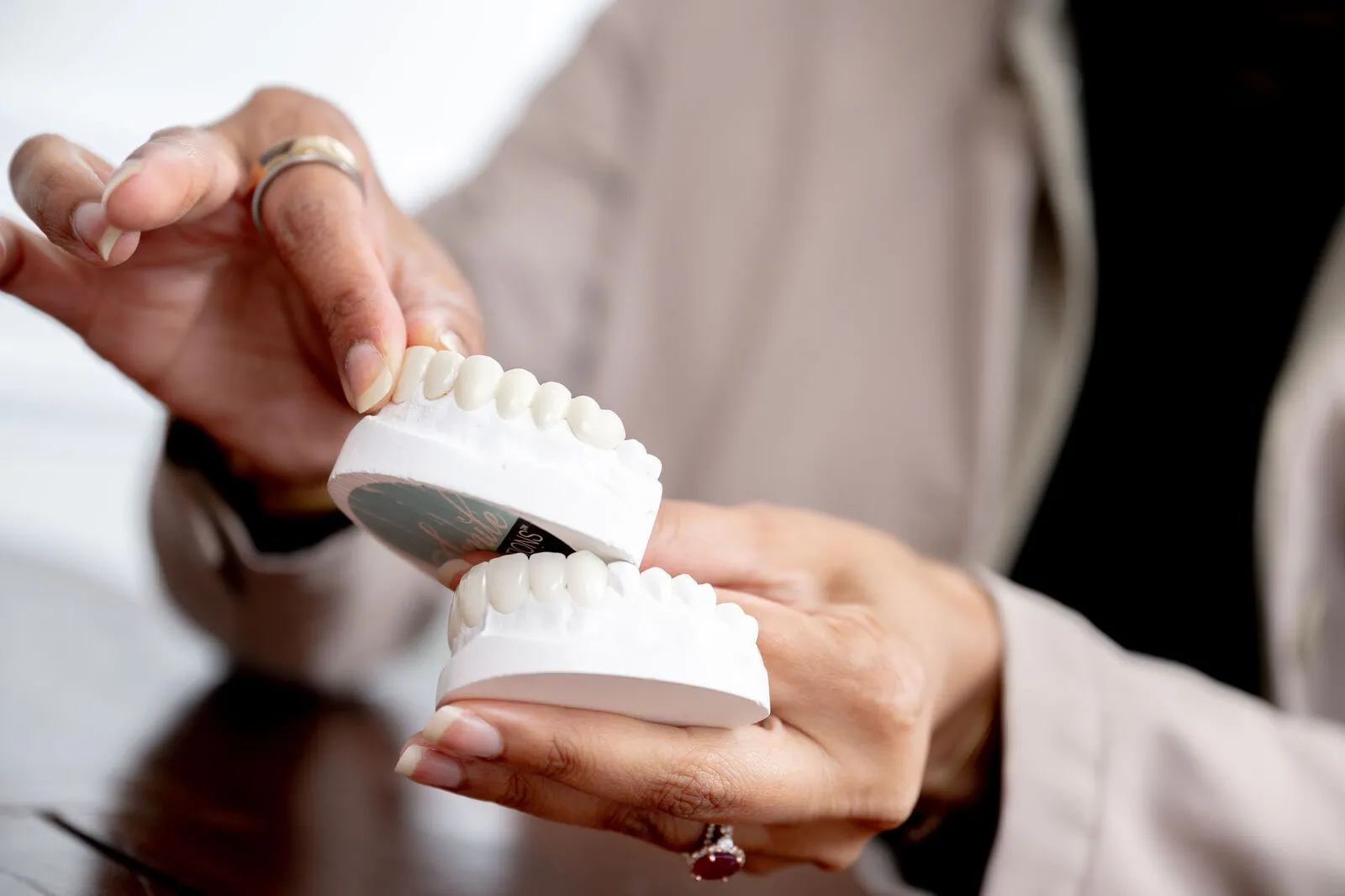
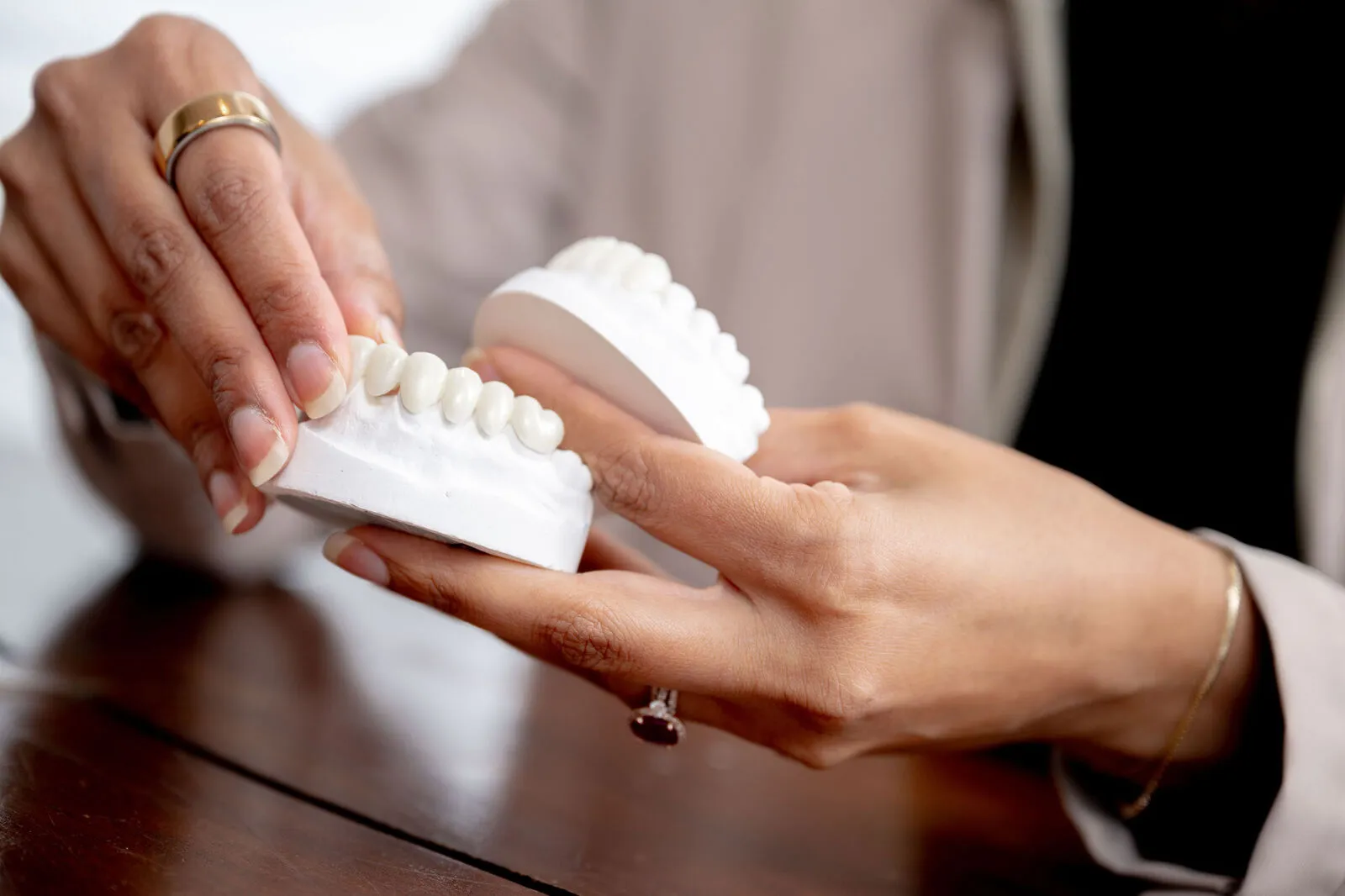
A full coverage dental crown is the upper part of a tooth.
A full coverage dental crown is the upper part of a tooth. In prosthetics, a dental crown is simply a cap on a tooth used to protect teeth damaged by caries, advanced root canal treatment, or bite reconstruction. Crowns can be attached to the patient's artificial or natural tooth roots. In the case of artificial roots, we deal with implants and prosthetic restorations. A crown on a tooth recreates the visible portion of the tooth.
Alongside prosthetic bridges, a dental crown is a permanent prosthetic restoration. It can be removed or cleaned independently. Its purpose is to completely cover the tooth and protect its internal tissues. It serves a strengthening and protective function in prosthetics, while also offering high aesthetic value.
A full coverage dental crown can be made of ceramics or porcelain. Our dentist will ensure the color of the dental crown matches the natural shade of your remaining teeth, which ensures it blends seamlessly with your natural teeth.
Types of dental crowns
Depending on the material from which crowns are made, there are several types:
- Porcelain crowns – on a metal, ceramic, or metal-gold base – gold has anti-caries properties; metal cores in dental crowns are recommended for filling gaps in side teeth.
- All-ceramic crowns – with high aesthetic values, strikingly resembling the patient’s natural teeth, are recommended for front restoration teeth.
- Composite and acrylic crowns – these are usually temporary crowns, but in some patients, are used as crowns for permanent teeth if it is not possible to install porcelain crowns.
- Full metal crowns – very rarely used, not aesthetic, but highly durable.
What are the indications for full dental crowns?
We recommend full dental crowns as prosthetic restorations for teeth undergoing root canal treatment or teeth with congenital enamel deficiency. Dental crowns can be used to restore mechanically damaged teeth—those that are cracked, broken, or severely worn. A dental crown may be recommended to protect a weak tooth from fracture, to cover an implant, or to secure a bridge. Another indication for a dental crown is to cover a deformed tooth to match the appearance of the remaining teeth in the jaw.
Full dental crowns cannot be used if the remaining tooth above the gum is less than 2-3 mm, or if the teeth are severely damaged by decay, meaning the disease has spread to the gum line or deeper. During a visit to our dental office, your dentist will determine whether a dental crown is suitable for prosthetic restoration or another recommended solution.
In Conclusion
Full coverage dental crowns are a reliable and long-lasting solution for restoring damaged, weakened, or aesthetically compromised teeth. By fully covering the tooth, a crown protects internal structures, restores function, and improves appearance while blending naturally with surrounding teeth. Whether used after root canal treatment, to support a bridge or implant, or to repair extensive damage, dental crowns play a vital role in modern prosthetic dentistry. A thorough dental evaluation ensures the most appropriate treatment option for achieving both durability and a natural-looking smile. Contact us today for more information or to make an appointment!
Related Articles
More About Dental Crowns
← Back to Dental Crowns
Main service page
Advantages & Disadvantages of Ceramic Crowns
Dental Crowns
Ceramic vs. Porcelain Crowns
Dental Crowns
Do Ceramic Crowns Turn Yellow
Dental Crowns
Full Coverage Crowns vs. Veneers
Dental Crowns
How Long do Ceramic Crowns Last
Dental Crowns
How Long Do Dental Crowns Last
Dental Crowns
How Long Do Full Coverage Crowns Last
Dental Crowns
How Much Do Dental Crowns Cost
Dental Crowns
Partial vs. Full Dental Crowns
Dental Crowns
What Are Dental Crowns
Dental Crowns
What are the types of Dental Crowns
Dental Crowns
What is a Full Coverage Crown?
Dental Crowns

Your Dentist
Dr. Hala Imam
DDS
Dr. Imam brings a genuine passion for family-centered care to every appointment at Cherrydale Family Dental. With advanced training in implants, cosmetic dentistry, and digital scanning technology, she combines clinical precision with a warm, unhurried approach that puts patients at ease.
Whether it is a routine cleaning, a complex restoration, or a child's first visit, her approach is the same: listen first, explain clearly, and treat gently.
Get In Touch
Questions About Indication for Full Coverage Crowns?
Our team is here to help. Contact Cherrydale Family Dental in Arlington, VA.